
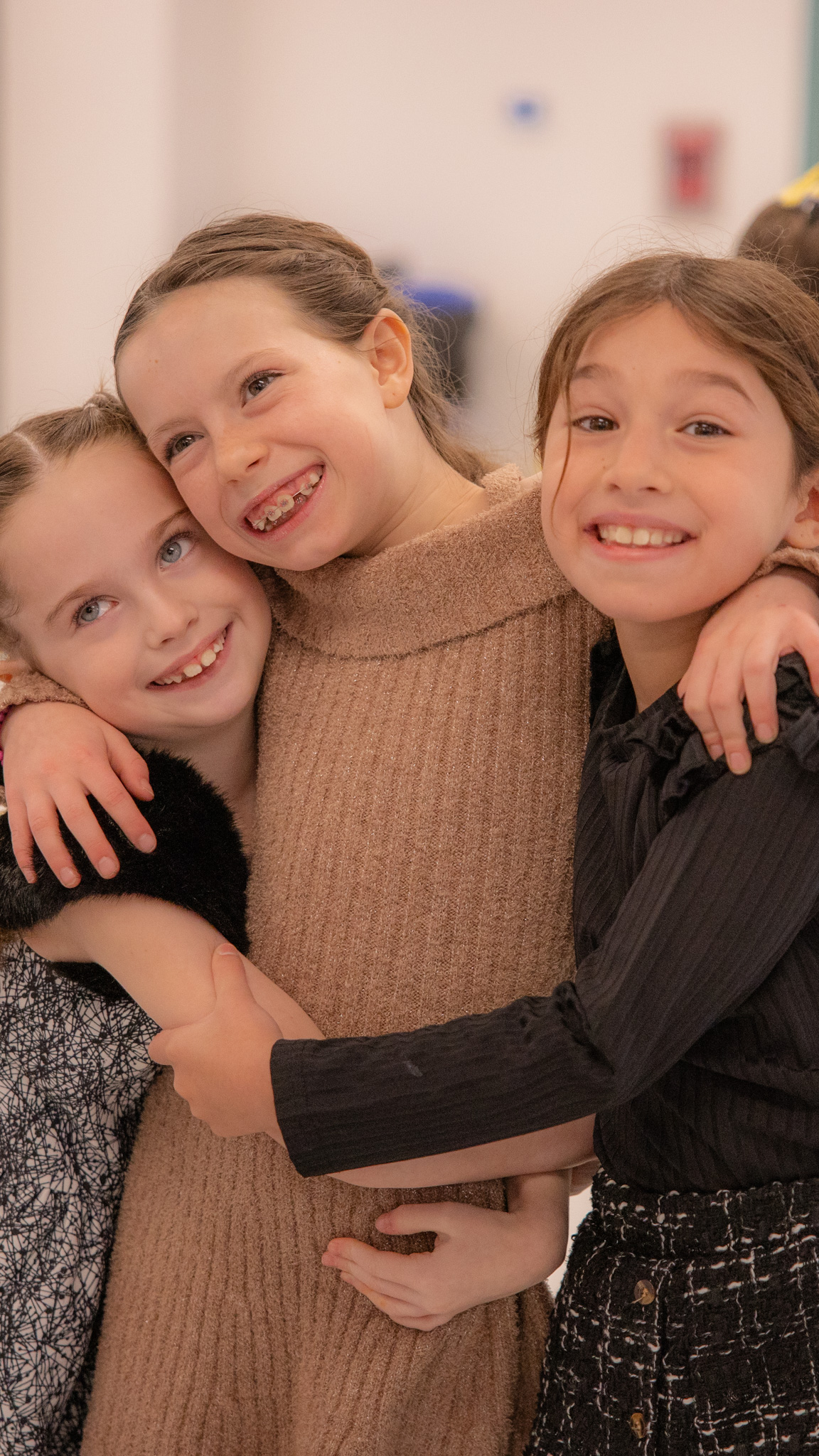

Confidence in young children is not about telling them they are wonderful. It is built through experience — through being given real challenges, real support, and the repeated discovery that they can do hard things.
Jewish day schools have always known this. The tradition of engaging children seriously — with questions, with text, with the expectation that their voices matter — is not a modern pedagogical innovation. It is ancient. And it turns out to be very good for developing confident young people.
Being Known Is the Starting Point
Before a child can be confident, they need to feel safe. And safety, for young children, begins with being known — recognized by name, welcomed into the community, noticed when something is off.
In a smaller school community like Schechter, children in the early grades are not anonymous. The teachers know them. The administrators know them. Often, the families of their classmates know them. That web of recognition is not incidental — it is the soil in which confidence grows.
When a child knows they are seen, they take risks. They raise their hand with the uncertain answer. They try the harder version of the task. They walk into school on Monday morning without dread.
High Expectations Held with Warmth
One of the hallmarks of strong Jewish education is that it does not confuse low expectations with kindness. Children who are not challenged do not become confident — they become bored, or anxious, because somewhere they sense that the adults around them don’t believe they can handle more.
At Schechter, academic and character expectations are high — and they are held with genuine warmth. Students are expected to engage with Hebrew as a real language, to wrestle with Torah texts as serious literature, to argue their position and defend it thoughtfully. These are not easy things for young children. They are meant to be challenging. And every time a child does one of them successfully, something builds inside them.
The Role of Ritual and Belonging
Confidence also comes from belonging to something with structure and meaning. The Jewish calendar and ritual give children a rhythmic, predictable framework for the year: Shabbat arrives every week; the holidays come in their season; the school celebrates and mourns and marks time together.
Children who know these rhythms feel competent navigating them — they know the songs, they know what happens next, they can anticipate and participate. That competence is a form of confidence. It generalizes.
Jewish Identity as a Source of Strength
One of the most important gifts a Jewish day school can give a young child is a strong, positive Jewish identity. Children who grow up knowing who they are — who can say “I am Jewish, and this is what that means, and I am proud of it” — have an anchor that serves them through the harder moments of childhood and adolescence.
The value of btzelem Elohim — that every person is created in the image of God and has inherent worth — is taught at Schechter not as a theological abstraction but as a lived reality. Children experience their own worth reflected back through how teachers speak to them, how the community treats them, how their contributions are received.
Learning to Disagree Well
Confidence is not the same as certainty. Genuinely confident people can hold an opinion, share it, and change it when the argument warrants. Jewish education has a long tradition of valuing argument — the Talmud preserves minority opinions precisely because disagreement is considered productive.
In the classroom, this means young children at Schechter learn that asking “why?” is not rude. That saying “I disagree” is allowed. That their questions are worth the time they take. Children who grow up in this intellectual culture become more confident thinkers — not because they always know the answer, but because they have learned to engage with the question.
The Bottom Line
- Confidence in young children is built through challenge, support, and the experience of success — not through praise alone.
- Being known and belonging to a kehillah gives children the safety to take intellectual and social risks.
- High expectations held with warmth produce confident, capable learners.
- Jewish ritual and calendar give children competence through belonging — they know the rhythms and can participate.
- A strong Jewish identity rooted in btzelem Elohim gives children an inner sense of worth that supports confidence across all areas of life.
- Learning to ask questions and disagree respectfully — a Jewish pedagogical tradition — builds lasting intellectual confidence.