
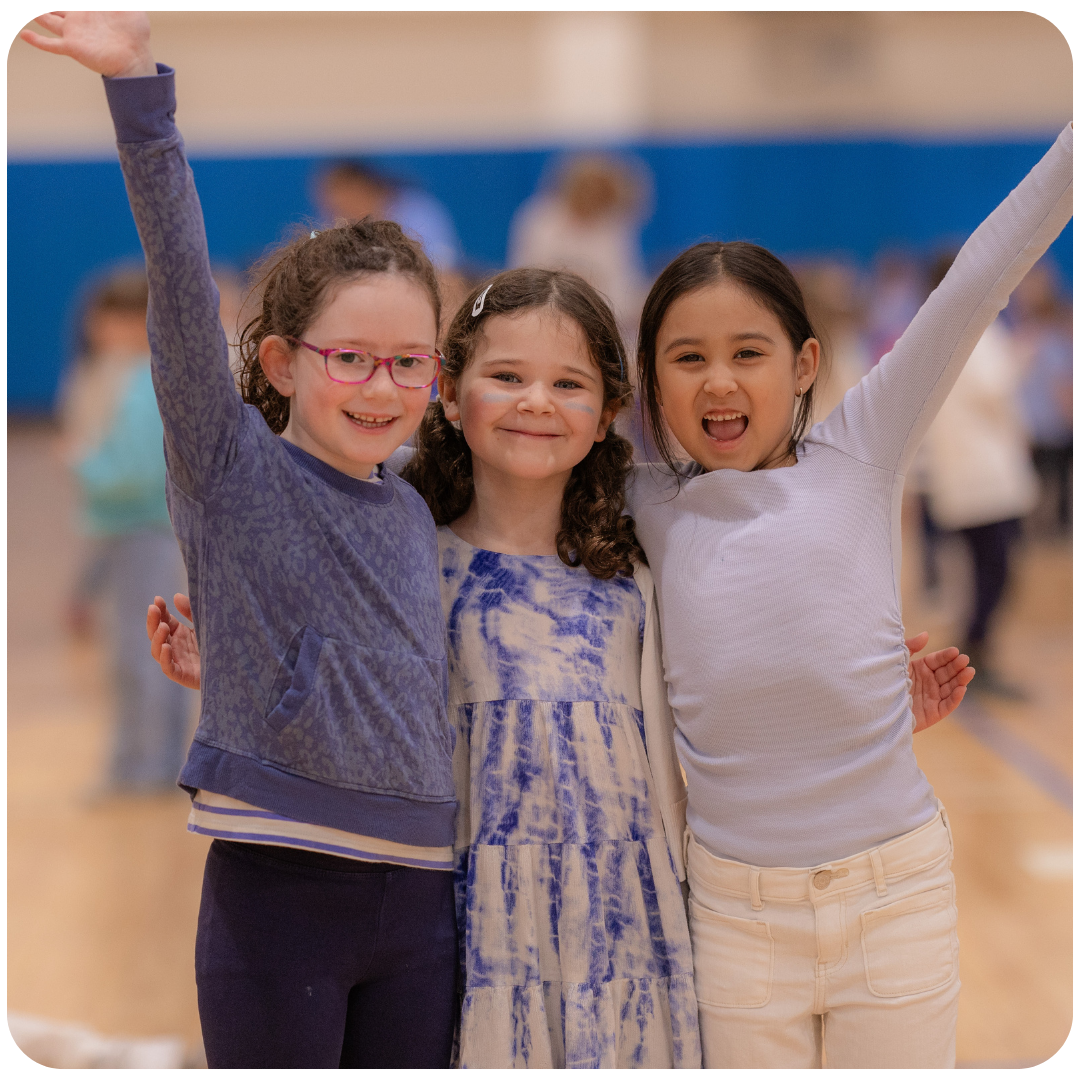

Ask a child who they are, and you’ll get a wonderfully literal answer: their name, their age, the sport they love, the sibling who drives them crazy. Ask again in a few years, and the answer grows roots. Identity isn’t something a child is handed all at once. It’s built slowly, in the company of people who share a story and live it out loud. That daily, lived-in quality is exactly what a Jewish day school offers.
At Schechter, building a strong Jewish identity isn’t a single lesson on the schedule. It’s the texture of the whole day — the language in the hallway, the rhythm of the week, the way a community marks time together. Here’s how that environment shapes children who know who they are.
Identity Grows From Belonging
Long before a child can articulate what it means to be Jewish, they feel what it means to belong. A Jewish day school surrounds students with peers, teachers, and traditions that reflect their own, so being Jewish is simply normal — not the exception they explain to classmates, but the air they breathe.
This sense of kehillah (community) does quiet, powerful work. When the whole school pauses for Shabbat on Friday, when the calendar bends around the holidays, when Hebrew is spoken as a living language and not a museum piece, a child learns that their heritage is something to inhabit, not something to defend. Belonging comes first. Identity follows.
Hebrew and Text Make the Tradition Theirs
Identity deepens when a child can read the sources for themselves. At Schechter, students don’t just learn about Jewish life — they learn the tools to access it directly. Hebrew literacy opens the siddur and the Tanakh. Studying Torah in chevruta (paired study) teaches them to wrestle with a text, to argue respectfully, to find their own voice inside an ancient conversation.
That ownership matters. A student who can decode a Hebrew prayer, follow a Torah portion, or trace a debate among commentators isn’t a guest in their own tradition. They’re a participant. The confidence that comes from that fluency carries far beyond the classroom.
Values Turn Belief Into Character
A strong Jewish identity isn’t only about knowledge — it’s about character. Schechter’s core values give students a vocabulary for the kind of people they’re becoming. They learn that every person is created b’tzelem Elohim, in the image of God, and that this carries an obligation: dignity, compassion, and respect for everyone. They learn achrayut (responsibility), the idea that Jews are responsible for one another and for repairing the world.
When children practice these middot daily — including a classmate, owning a mistake, contributing to a tzedakah project — Jewish identity stops being abstract. It becomes the way they treat people. That’s identity you can see.
Joy Makes It Stick
Identity built only on obligation rarely lasts. Identity built on simcha (joy) does. Schechter leans into the celebration at the heart of Jewish life: the music of the holidays, the festivity of Purim, the warmth of a community gathering for a life-cycle moment. Children who associate their heritage with delight, song, and togetherness carry that warmth into adulthood.
This is why joyful Jewish experiences in childhood matter so much. The student who danced on Simchat Torah, who built a sukkah with friends, who felt the hush before the candles on Friday — that student grows into an adult for whom Jewish life feels like home, not homework.
A Connection to the Jewish People and to Israel
Finally, a strong Jewish identity reaches beyond the individual to a sense of peoplehood. Students come to understand themselves as part of something vast and continuous — Yisrael, the Jewish people across history and around the world. Learning the history and the modern reality of the State of Israel, encountering Israeli culture, and building Hebrew fluency all anchor a child in a story far bigger than themselves.
That perspective is steadying. A child who knows they belong to a people that has carried its values across millennia carries themselves differently.
The Bottom Line
A Jewish day school helps students build a strong Jewish identity by making the tradition something they live rather than something they observe from a distance. At Schechter, that happens through:
- Belonging — a kehillah where being Jewish is simply the norm.
- Fluency — Hebrew and text skills that give students direct access to their tradition.
- Character — core values and middot practiced in everyday life.
- Joy — celebration that makes Jewish life feel like home.
- Peoplehood — a living connection to the Jewish people and to Israel.
Identity isn’t taught in a single moment. It’s grown over years, in a community that lives its values out loud. That’s the gift a Jewish day school gives a child: not just knowledge of who they are, but the confidence to carry it forward.