
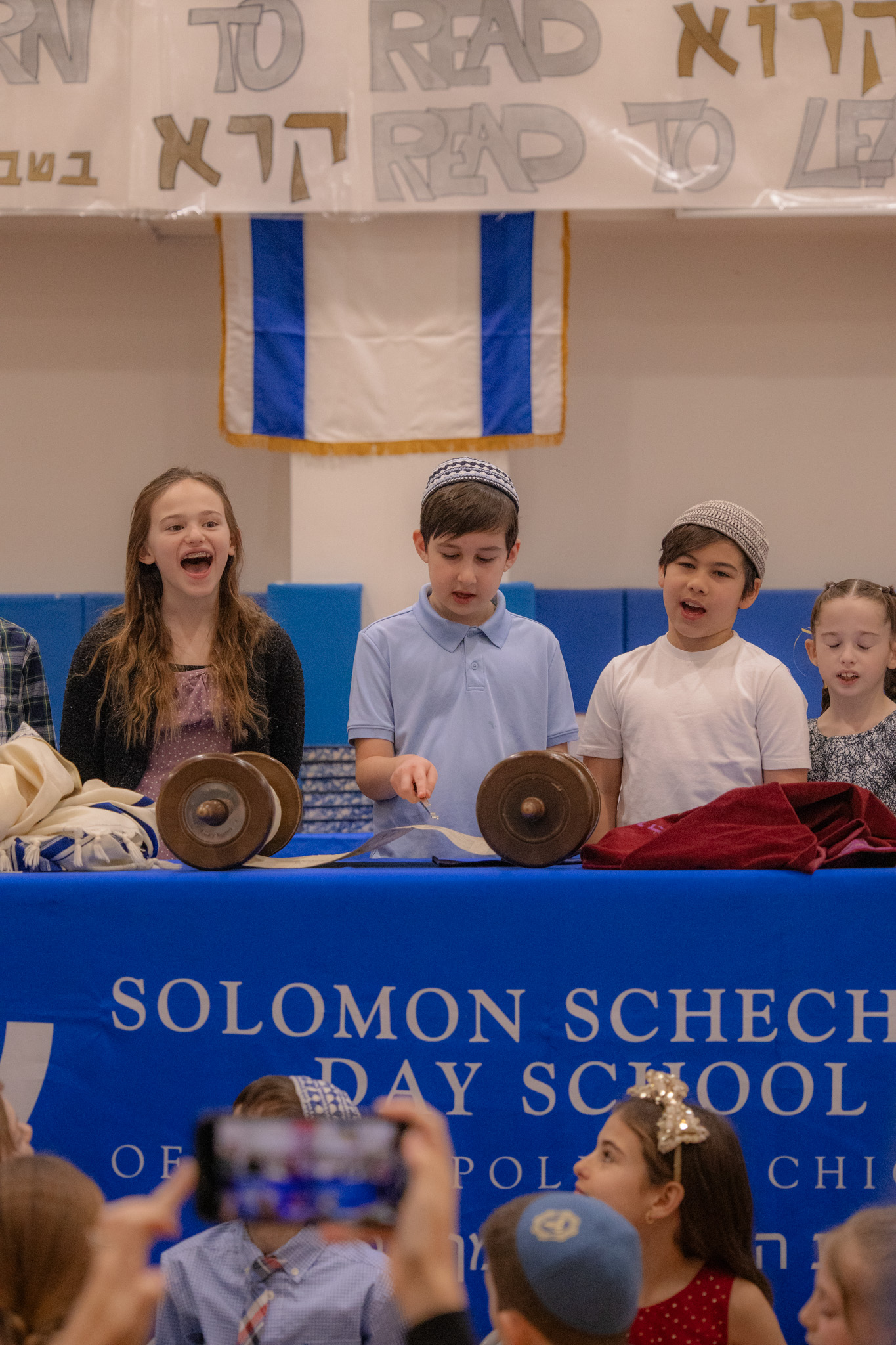

When families tour the Ginsburg Early Childhood Center, parents often ask a version of the same question: “Will this give my child a strong start?” The honest answer is yes — and more than that. A high-quality Jewish early childhood program does something an academic preschool alone can’t: it shapes how a child approaches learning for the rest of their life.
That’s a big claim. It’s also well-supported by what early childhood research and Jewish educational tradition both tell us.
The Early Years Set the Frame
The first five years of life are when the brain is building the most foundational architecture it will ever build — neural pathways for language, attention, emotional regulation, and curiosity. This isn’t new information. What’s becoming clearer in recent research is that the quality of those early experiences matters enormously, and not in a “more flashcards” kind of way.
Children who experience early environments that are warm, predictable, language-rich, and intellectually engaging show stronger outcomes years later — in academic achievement, social adjustment, and emotional well-being. The variable that matters most is the relationship between child and teacher, layered on top of meaningful content and a coherent community.
Jewish early childhood programs, when done well, deliver all of this at once.
What Jewish Early Childhood Adds
Beyond the universal benefits of strong early education, a Jewish program offers something distinct: an integration of identity, community, and learning that compounds over time.
A felt sense of belonging. Children at Ginsburg learn that they’re part of a kehillah — a community — from their earliest days. They light Shabbat candles with classmates, share challah, celebrate birthdays with classroom traditions that fold into the Jewish calendar. Belonging isn’t taught as a concept. It’s experienced.
Language richness, including Hebrew. Children sing brachot, hear Torah stories, learn holiday vocabulary, and absorb Hebrew words and rhythms through play. Research on early language exposure consistently shows that children who hear multiple languages before age five develop stronger linguistic flexibility — even if they don’t become fully bilingual right away.
Rituals as anchors. A Jewish week has shape: the buildup to Shabbat, the rest of Shabbat itself, the start of a new week. Children learn that time has texture — that it isn’t just one undifferentiated stretch. That sense of rhythm supports executive function and a capacity for anticipation.
Multi-sensory engagement. Jewish life is hands-on. Hanukkah involves olive oil, candles, dreidels, and food. Pesach involves searching, asking questions, telling stories, and tasting. Sukkot involves building. Children’s brains love this kind of layered, sensory-rich learning.
How Early Habits Become Lifelong Patterns
Here’s where the long-term benefits get interesting. The patterns children form in their earliest years tend to stick.
A child whose preschool celebrated curiosity grows into a student who asks questions. A child who learned that disagreement could be respectful — even joyful — grows into an adult who debates ideas without taking offense. A child who experienced learning as connected to their own identity, family, and community develops a kind of intrinsic motivation that pushes through hard moments later.
Schechter’s commitment to masa — the Jewish concept of the journey — shapes this from the very beginning. Learning is framed as ongoing, lifelong, and personal. There’s no implication that you “finish” being educated when you graduate. The journey continues. Children pick up that orientation early, and it serves them well.
Social and Emotional Foundations
Strong early childhood programs build social-emotional skills that academic environments depend on. A child who can wait their turn, name a frustration, regulate big feelings, and ask for help is ready for kindergarten in ways that go beyond knowing letters.
Jewish early childhood programs teach these skills inside a framework of values. A child who’s been guided to think about chesed (kindness) when a friend falls down has internalized something more than “be nice.” They’ve started weaving Jewish values into how they treat people — at age four. By the time they’re nine, that weaving is well underway. By the time they’re nineteen, it’s the fabric of who they are.
The seven Schechter core values begin showing up at Ginsburg in age-appropriate ways. A teacher might not say “Btzelem Elohim” to a three-year-old, but they’ll say, “Every person in our class is special, and that’s how Hashem made us.” The seed is planted. The vocabulary comes later.
What Parents Notice First
Parents who choose Jewish early childhood programs often describe the same shift: their child comes home humming a Shabbat song, asks to light candles on Friday night, talks about a story from the parsha. The Jewish life of the home and the Jewish life of the school start reinforcing each other. That’s a powerful loop. It’s what early childhood educators sometimes call “spiraling” — the same content reappearing at home and at school in slightly different forms, each time deepening the child’s understanding.
For families where Jewish life is central, this is exactly what they hope for. For families still finding their way, it can be transformative — bringing rituals into the home that feel natural because the child is so confident in them.
Foundations That Carry Forward
A child who graduates from Ginsburg and continues into the Sager School moves through a continuous Jewish educational journey. That continuity matters. The early childhood experience isn’t an isolated chapter — it’s the opening of a book that keeps developing the same characters, themes, and questions for years to come.
Even children who eventually attend other schools carry forward what they built at Ginsburg: language confidence, social-emotional skill, a positive Jewish identity, and a relationship with learning itself.
The Bottom Line
The benefits of Jewish early childhood education extend far past the preschool years. A few things worth knowing:
- Strong early relationships with teachers shape how children approach all later learning.
- Jewish content built into play, song, and ritual creates a felt sense of belonging.
- Hebrew, brachot, and Torah stories grow vocabulary and language flexibility.
- Multi-sensory holidays build engaged, curious learners.
- Values like chesed, kavod, and achrayut take root before children can name them.
- The continuity from Ginsburg into the Sager School deepens what was started early.
The earliest years are short. The patterns formed in them are long. A high-quality Jewish early childhood program isn’t just a good start. It’s a foundation that holds for a lifetime.